

Canon EF 800mm f/5.6L IS USM Review
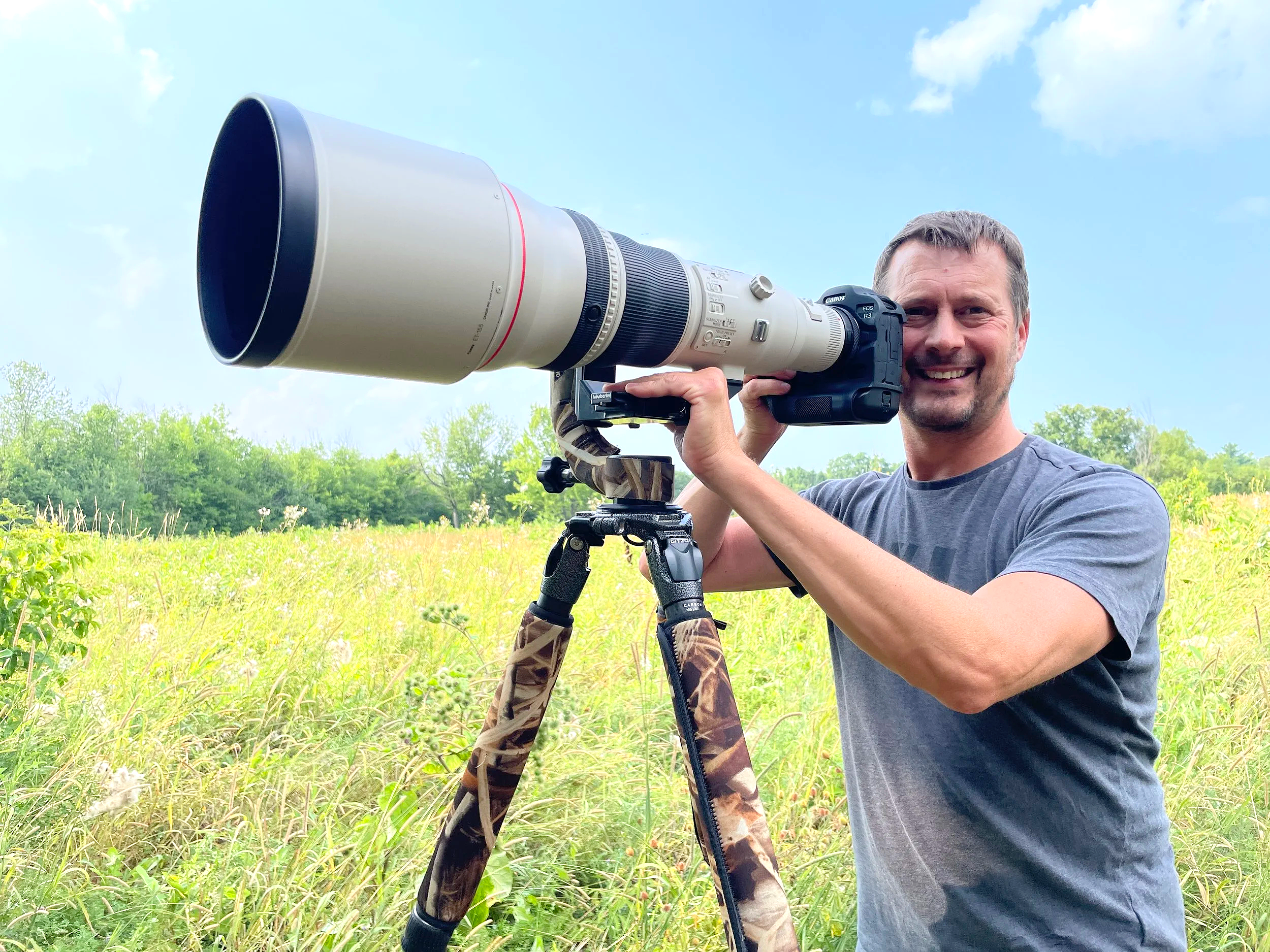
Canon EF 800mm f5.6 L IS - Canon R3
A Deep Dive Into Performance, Practical Use & Why I Chose It
Super-telephoto lenses are tools of specialisation. They aren’t impulse purchases, and they aren’t casual additions to a kit. When you commit to 800mm, you’re committing to a very specific way of working, one built around distance, patience, fieldcraft, and intentional composition.
After considerable thought and research, I purchased the Canon EF 800mm f/5.6L IS USM. This article goes beyond surface-level impressions and dives into why I chose it, how it performs technically, and why it continues to be a relevant and powerful option even in Canon’s RF era.
Why I Purchased the EF 800mm f/5.6L IS in 2026!
The decision came down to three main factors:
Market value of used EF super-telephotos
Realistic financial considerations
My specific wildlife use case
With the release of Canon’s RF super-telephoto lineup, including the Canon RF 800mm f/5.6L IS USM, many EF versions have entered the used market. The RF version is optically phenomenal — but its price places it firmly in the top tier of professional investment gear. Realistically, I will likely never be in a position to afford such a lens.
The EF 800mm, however, has reached a price point on the used market that makes it attainable — without sacrificing professional-level performance.
I purchased mine from Henry's Cameras, where the service was excellent. Buying from a reputable retailer mattered to me because:
It came with a warranty.
It included the original hard case and all accessories.
The condition was verified and professionally assessed.
Included with the lens:
Canon hard transport trunk
Lens hood
Drop-in filter holder
Lens strap
Front and rear caps
Documentation
With super-telephotos, condition and service history matter. Buying properly gives confidence when investing in a lens of this caliber.
Why 800mm? The Ethics and Practicality of Distance
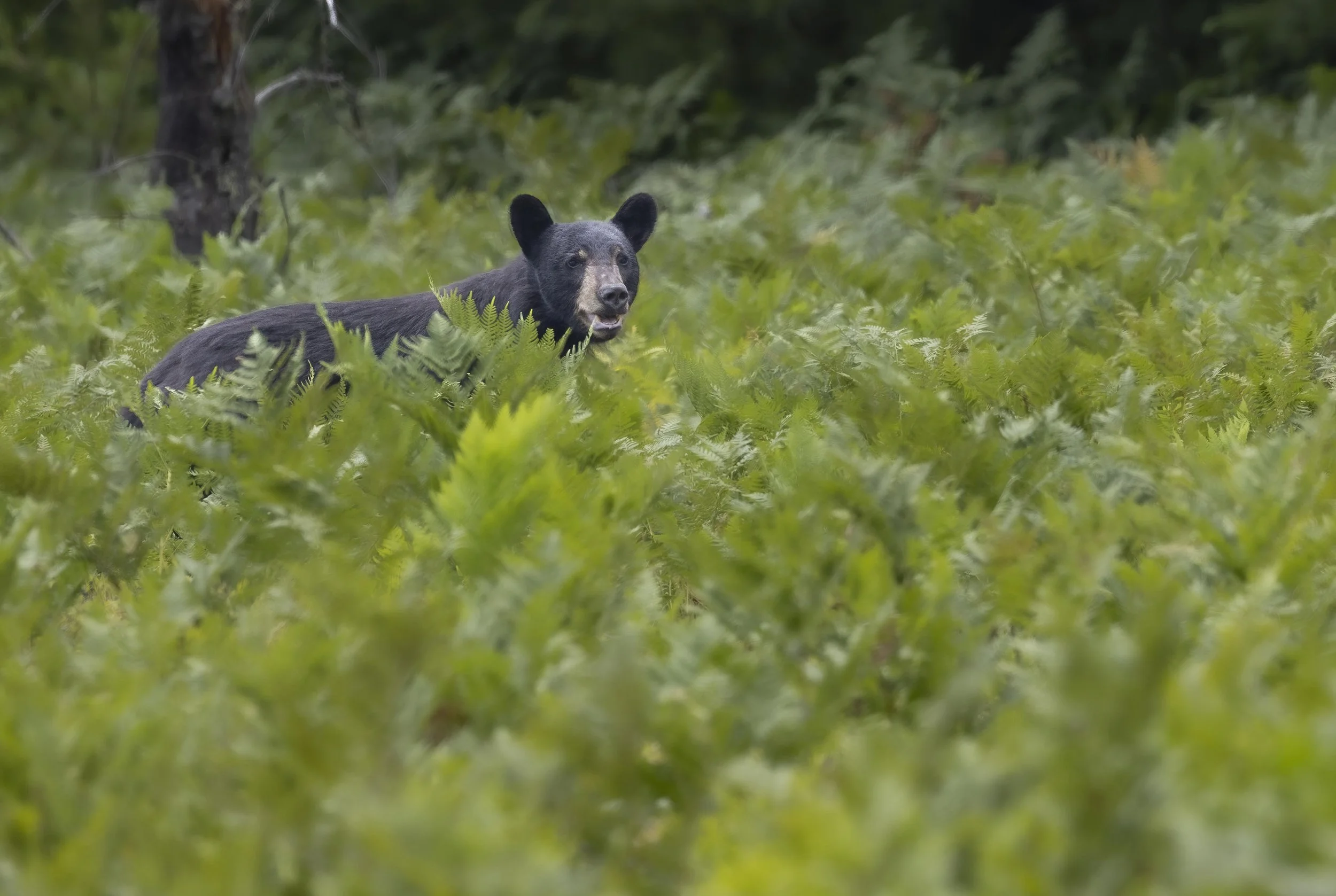
Black Bear - Algonquin Provincial Park, Ontario, Canada.
The focal length is the real story.
800mm isn’t about filling the frame at all costs, it’s about working distance.
For species such as:
Bears
Wolves
Deer
Raptors on nests
Owls and other wary birds
Distance equals safety and authenticity.
Wildlife photography changes the moment an animal becomes aware of you. Body posture shifts. Feeding stops. Alert behaviour begins. Images become observational rather than natural.
By working at 800mm:
I reduce disturbance.
Subjects behave more normally.
I can document authentic behaviour.
This is especially important for survey work monitoring birds of prey on nests. Raptors are particularly sensitive to perceived threats. A shorter focal length would require me to be closer, increasing stress risk.
800mm allows documentation without interference.
That’s not just convenience — it’s responsible field practice.
Technical Specifications & Practical Meaning
Core Specs
800mm focal length
f/5.6 maximum aperture
Minimum focus distance: 6 meters
Approx. 5 meters with extension tube
4-stop Image Stabilisation
Two IS modes
Weather-sealed magnesium alloy body
Approx. 4.5 kg (9.9 lbs)
Canon EF 800mm f/5.6L IS USM Button Layout Overview
This super-telephoto lens is engineered for professional wildlife and sports photography, with a thoughtfully arranged control layout that allows fast adjustments while keeping your eye on the viewfinder. The switches are positioned along the left side of the barrel (when mounted), making them easy to access with your supporting hand during shooting.
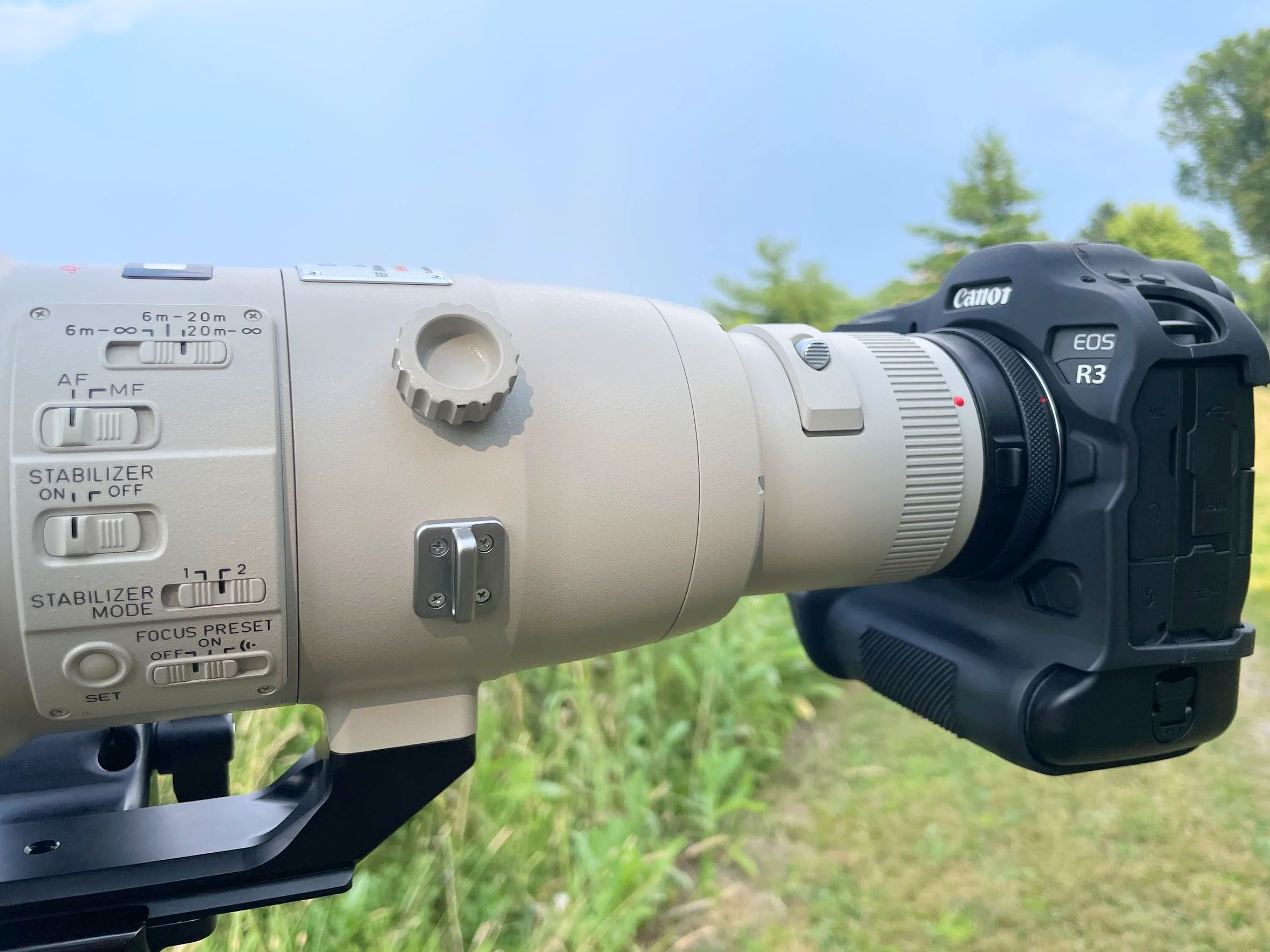
Main switches and controls:
AF/MF Switch – Toggles between autofocus and manual focus.
Focus Limiter Switch – Selects either the full focusing range or 6m–∞ to improve autofocus speed.
Image Stabiliser (IS) On/Off Switch – Activates or deactivates image stabilisation.
IS Mode Selector – Mode 1 for general stabilisation; Mode 2 for panning shots.
Focus Preset Controls – Includes a Set button and playback ring to store and instantly recall a specific focus distance.
Focus Stop Buttons – Four buttons spaced around the front barrel that temporarily pause autofocus (customisable on compatible camera bodies).
Manual Focus Ring – Large, rubberised ring for smooth and precise manual focusing.
The overall design emphasises tactile feedback and quick accessibility, which is essential when tracking fast-moving subjects at extreme distances.
Minimum Focus Distance in Practice
At 6 meters, this isn’t a close-focus wildlife lens. An extension tube could reduce it to roughly 5 meters — but realistically, I am almost always beyond 6 meters from wildlife subjects. My work priorities distance, so this limitation rarely matters.
Handling & Field Ergonomics
There’s no pretending this is a lightweight lens.
However, balance is excellent when mounted properly. On a sturdy tripod with a quality gimbal head, it becomes fluid and surprisingly nimble.
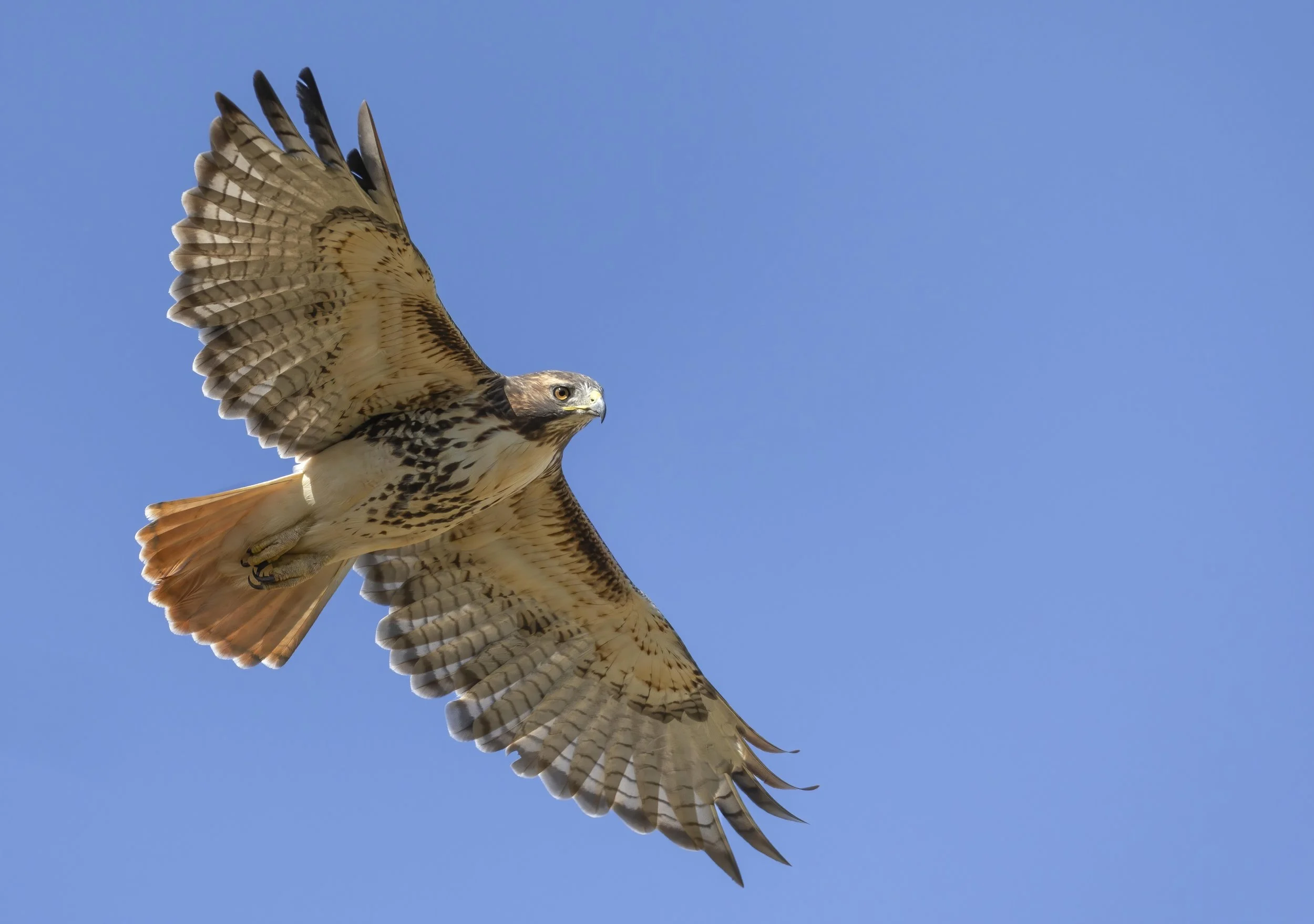
Red Tailed Hawk - Canon R3 - EF 800mm F5.6 L IS - Handheld - 1/3200th sec F5.6 ISO 800
Handholding
Yes — briefly.
With good technique and short bursts, it’s possible. The 4-stop IS makes it feasible in controlled situations.
But for birds in flight or prolonged sessions?
A tripod-mounted gimbal is essential.
At 800mm, even small movements translate dramatically in the viewfinder. Stability directly influences keeper rate.
Image Stabilisation: Real-World Impact
The 4-stop IS system is genuinely impressive.
Mode 1: General stabilisation
Mode 2: Panning
Mode 2 is particularly valuable for erratic subjects like birds in flight. The stabilised viewfinder image helps maintain framing and reduces fatigue.
Tripod sensing IS means stabilisation remains effective even when mounted — eliminating the need to disable IS manually.
Autofocus Performance on Modern Bodies
Paired with modern cameras like:
Canon EOS-1D X Mark III
Canon EOS R3
Autofocus performance remains exceptional.
Why?
Because this lens was engineered for professional sports and wildlife photographers from the start.
Fast ring-type USM motor
Accurate tracking
Reliable subject acquisition
Excellent compatibility with modern AF systems
On the R3, eye-detection AF works surprisingly well — even at 800mm.
Testing on:
Red-tailed hawks in flight
Barred Owl portraits
My son running toward the camera
My dog Myah sprinting across a field
The lens locked focus confidently and consistently.
Image Quality & Optical Performance

My Son Henry - Canon R3 - EF 800mm F5.6 L IS - 1/2000th Sec f5.6 ISO 800
Sharpness
This lens is sharp wide open at f/5.6.
That matters because with wildlife, you often don’t have the luxury of stopping down. Light changes quickly. Shutter speed is critical.
Corner-to-corner sharpness is impressive. Stopping down to f/6.3 or f/7.1 provides a slight contrast boost, but the gain is subtle.
Chromatic Aberration
Minimal.
High-contrast edges — such as white feathers against dark backgrounds — show very little fringing. Canon’s fluorite elements do their job exceptionally well.
Vignetting
Mild at f/5.6
Reduced by f/6.3
Easily corrected in post processing
At 800mm, most compositions isolate subjects centrally anyway.
Bokeh
At 800mm, background compression is dramatic.
The bokeh is clean, smooth, and distraction-free. Subject isolation is extraordinary, even in cluttered woodland environments.
Low-Light Performance
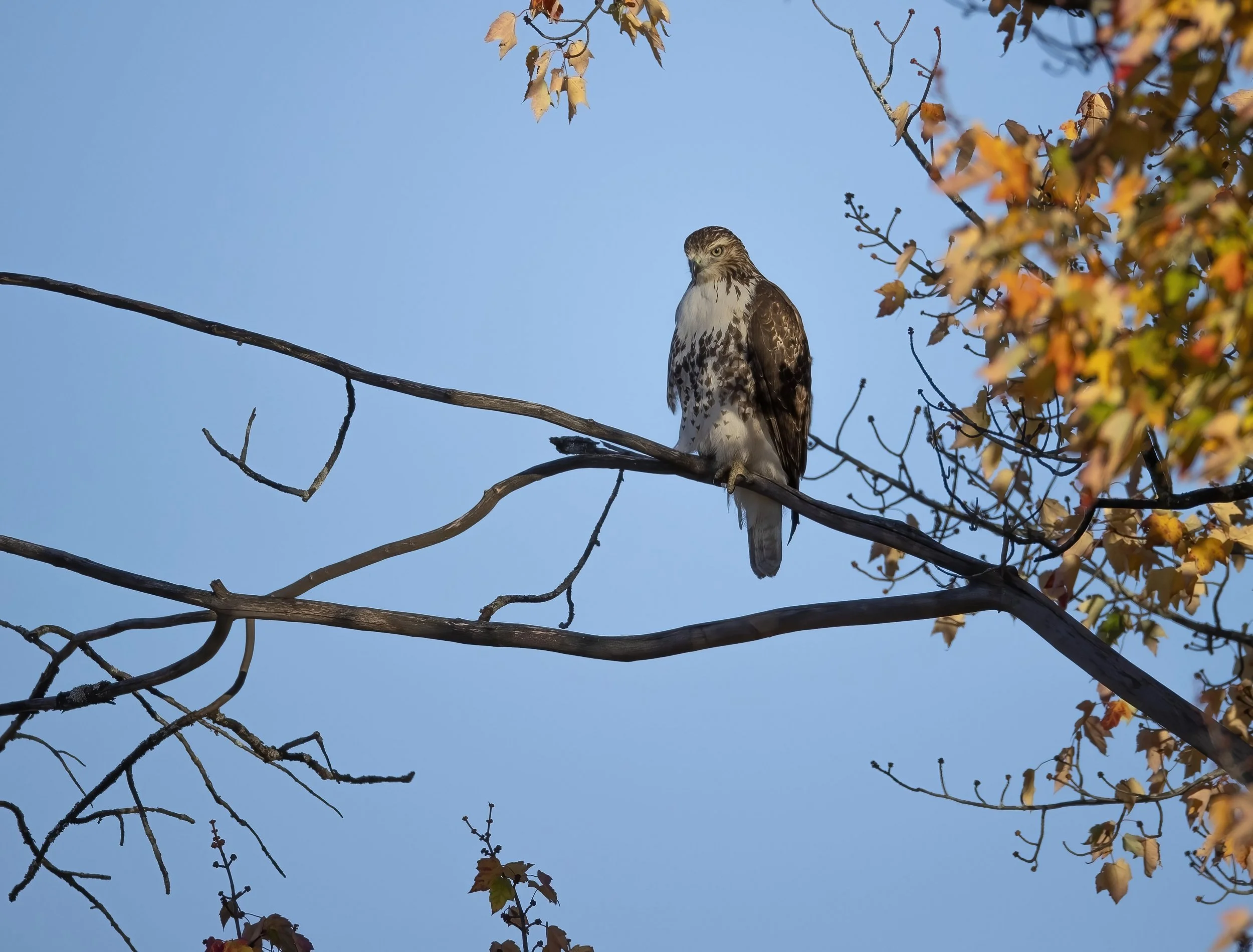
Red Tailed Hawk - Low Light - Canon EF 800mm F5.6 L IS - Canon 1DX MK III - 1/800th Sec f5.6 ISO 12,800
At f/5.6, you’re not working with huge light-gathering capability. However, modern sensors compensate significantly.
In early morning or forested conditions:
ISO performance on the 1DX Mark III and R3 makes this lens very usable.
IS assists with static subjects.
For moving wildlife, shutter speed remains the limiting factor.
It’s a lens that rewards careful exposure management.
Teleconverter Performance
Using Canon EF extenders:
1.4× Teleconverter
Focal length: 1120 mm, aperture: f/8
Autofocus works on 1DX Mark III and R3
Light loss: 1 stop → may need higher ISO or slower shutter
Autofocus: Often slower; only works on some cameras
Image quality: Slight decrease in sharpness and contrast
Handling: More sensitive to camera shake
2× Teleconverter
Focal length: 1600 mm, aperture: f/11
Autofocus functional on R3 (not on the 1DX MK III)
Light loss: 2 stops → challenging in anything but bright light
Autofocus: Usually disabled; manual focus often required
Image quality: Noticeable drop in sharpness, contrast, and increased chromatic aberration
Handling: Heavier and harder to stabilise
Bottom line: 1.4× is a good compromise between reach and usability; 2× gives maximum reach but with major penalties in autofocus, exposure, and image quality.
Alternatives like 400mm, 500mm, or 600mm primes with teleconverters offer modular reach — but stacking optics always involves trade-offs.
With a native 800mm, you start at maximum optical integrity.
Weather Sealing & Durability
This lens is built for in the field abuse. (Not that I do)
Full weather sealing
Professional-grade construction
Designed for harsh environments
Rain, snow, dust — it handles real-world wildlife conditions confidently.
Canon still services and repairs this lens. For how many more years is uncertain — but for now, support remains available.
Real-World Field Results
My early field use includes:
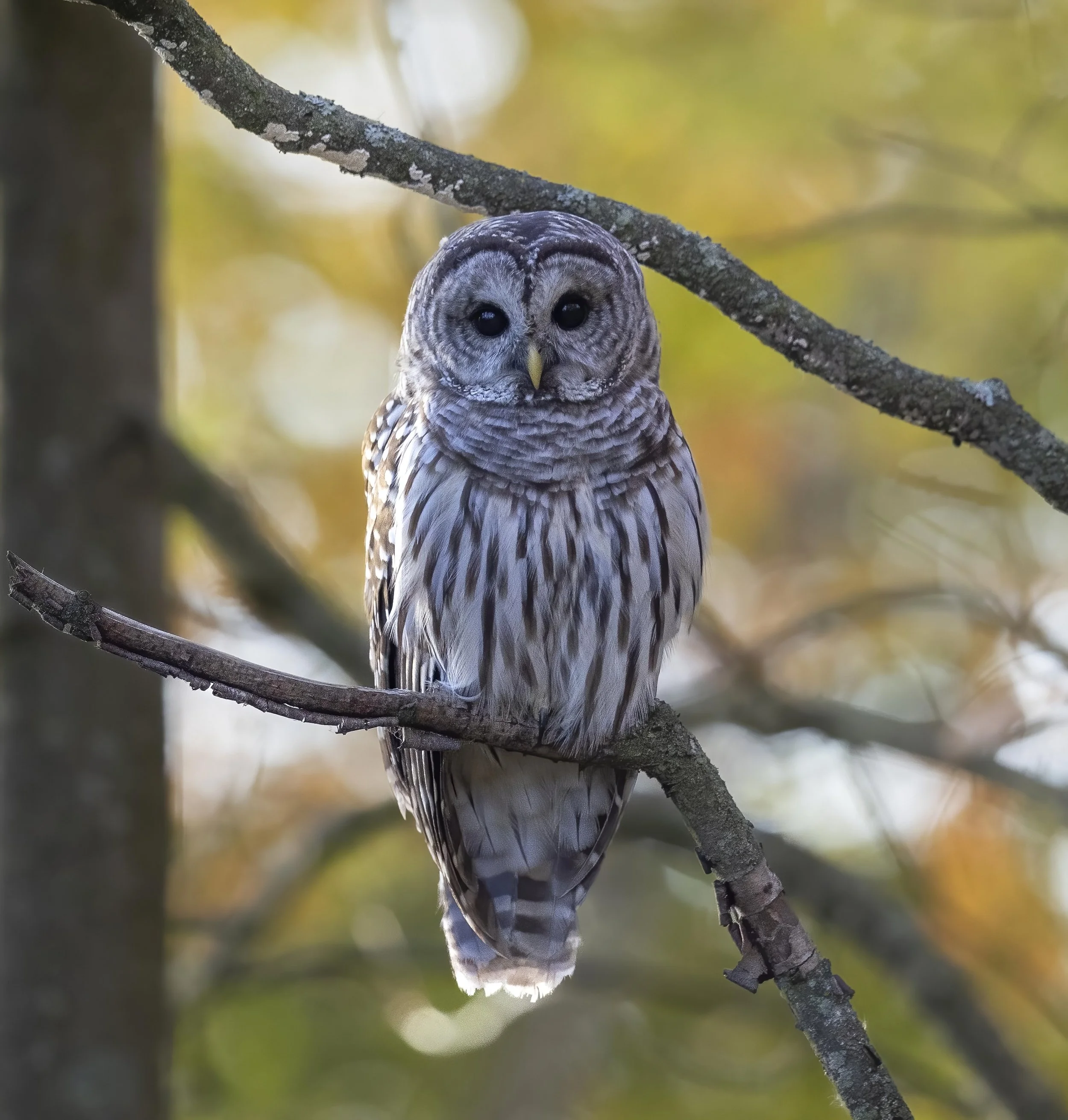
Barred Owl - Canon 1DX MK III - EF 800mm F5.6 L IS - 1/1600th Sec - f8 - ISO 6,400
Red-tailed hawks in flight
Barred Owl in woodland setting
Fast-moving human subject testing (my son running toward camera)
Results have been consistently sharp, especially when tripod mounted.
Birds in flight handheld? Challenging.
Tripod + gimbal? A completely different experience.
Is It Still Relevant in the RF Era?
For me, Yes.
The RF 800mm is optically advanced and lighter — but cost matters. The EF 800mm still delivers:
Elite-level sharpness
Professional autofocus
Strong IS
Excellent build quality
Compelling used-market value
For wildlife, sports, and press photography requiring extreme reach, it remains a viable and intelligent option.
Included YouTube Reviews
I’ve also published two YouTube videos:
Why I purchased the EF 800mm f/5.6L IS
In-the-field wildlife use — non-technical, real-world results
These reviews show:
Image & Video samples
Field handling
Real wildlife performance
Including footage of hawks, owls in action. With Conclusions & Recommendations.
Conclusion & Recommendation
After spending meaningful time working with the Canon EF 800mm f/5.6L IS USM, I can confidently say this is not just a long lens — it’s a commitment to a style of photography built around patience, distance, and precision. It’s a specialist tool, and when used within its intended purpose, it performs at an exceptionally high level.
The current used market has created a rare window of opportunity. What was once an ultra-exclusive, agency-level super-telephoto is now realistically attainable for serious wildlife and sports photographers. That shift alone makes this lens incredibly compelling. While the newer Canon RF 800mm f/5.6L IS USM offers modern refinements and reduced weight, the price difference is substantial — and in real-world wildlife results, the EF version still delivers professional-grade files with outstanding detail, contrast, and subject isolation.
What truly solidifies my recommendation is how well this lens aligns with ethical wildlife practices. Eight hundred millimeters allows me to maintain a safe and respectful working distance from sensitive species. Whether photographing bears in open terrain, deer along woodland edges, wolves at distance, or birds of prey on nests, I can remain far enough away to avoid altering natural behaviour. The resulting images feel authentic because the subjects are behaving naturally — not reacting to my presence. For survey work, especially with wary raptor species, that distance is invaluable.
From a performance standpoint, the lens holds up remarkably well. It is sharp wide open at f/5.6, which is critical when working in dynamic lighting conditions where stopping down isn’t always possible. Autofocus remains fast and reliable on modern bodies like the Canon EOS-1D X Mark III and Canon EOS R3, and the 4-stop Image Stabilisation system continues to provide meaningful support in the field. Mounted on a tripod with a gimbal head, the lens feels balanced and surprisingly fluid for its size. Yes, it is heavy — but that’s part of the reality of true super-telephoto performance.
There are, of course, considerations. This lens requires proper support equipment. It demands thoughtful setup and deliberate shooting technique. It is not the most flexible focal length for general photography. But if you genuinely need 800mm — not occasionally, but consistently — then nothing replaces native reach. Teleconverters can extend shorter primes, but they introduce light loss and incremental optical compromises. Starting at a true 800mm gives you un-compromised reach from the outset.
It’s also worth noting that Canon continues to service and repair this lens. While no one can predict long-term support timelines, it remains an actively supported professional product. That reassurance adds confidence when investing in a used copy.
For photographers who:
Prioritise wildlife and long-distance subjects
Value ethical working distance
Need corner-to-corner sharpness at 800mm
Are comfortable with tripod-based shooting
Want professional optical quality without RF-level pricing
I would strongly recommend the Canon EF 800mm f/5.6L IS USM.
For me personally, it delivers exactly what I was hoping for: exceptional sharpness, clean bokeh, reliable fast autofocus, strong stabilisation, and the ability to document wildlife without intrusion. It feels purposeful, deliberate, and built for serious work.
If I were faced with the same decision again today, knowing what I now know after real-world use, I would make the same choice without hesitation. The EF 800mm may no longer be the newest super-telephoto in Canon’s lineup, but it remains one of the most capable — and at today’s used prices, one of the most intelligent long-reach investments available.
Please feel free to leave a comment in the section below.
Thanks Rich :-)