
Chasing Winter Light: A Wildlife Photographer’s Guide to Shooting in Snow
Tips for Photographing Wildlife in the Snow
Photographing wildlife in snowy environments is one of the most rewarding experiences a photographer can have, but it comes with its own set of technical, environmental, and personal challenges. Snow simplifies landscapes, amplifies light, and creates incredible atmosphere, yet it can confuse camera meters, strain equipment, and quickly expose any gaps in preparation. With the right approach, winter conditions can elevate your wildlife imagery to a whole new level.
Understanding Exposure in Snow
One of the most common mistakes when photographing snow is trusting your camera’s meter. Cameras are designed to expose scenes to a mid-tone grey, so when faced with a predominantly white environment, they will almost always underexpose the image. This results in snow appearing dull and grey rather than clean and white.

Arctic Fox - Canon R3 - RF 100-500 L IS - 1/400th Sec f/11 ISO 3200 +2 EC
To counter this, overexposing your image is often essential. Using positive exposure compensation—typically +1 to +2 stops which helps restore brightness and realism. Always monitor your histogram and push the exposure toward the right without blowing out important highlights.
This technique is vital when photographing mountain hares in the Cairngorms during a snowstorm. Their white winter coats blend seamlessly into the background, and without intentional overexposure, both the hare and snow lose their impact. The same applies when photographing Arctic foxes in snowy tundra, where careful exposure preserves fur detail while keeping the environment bright and natural.
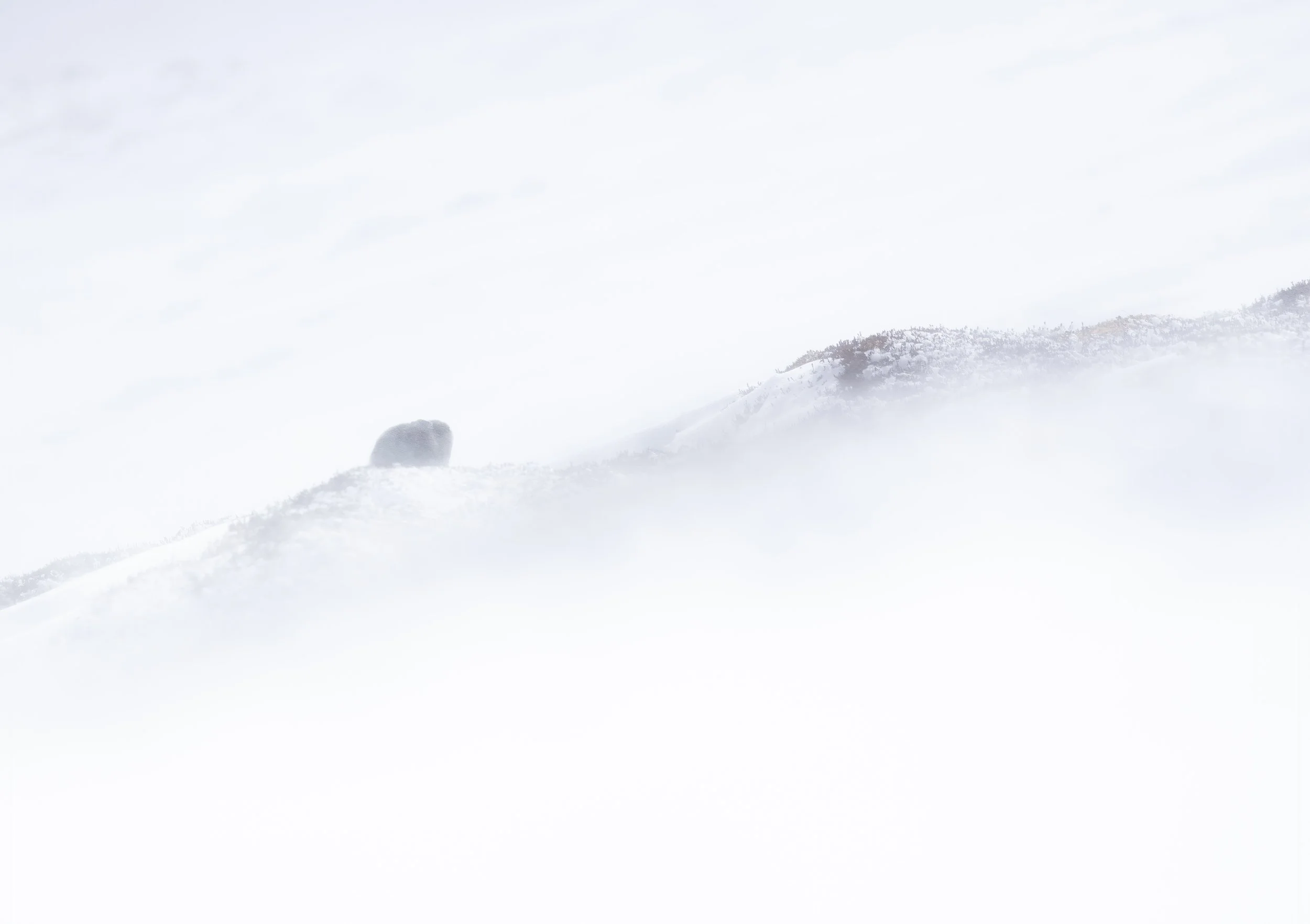
Mountain Hare - Cairngorms Scotland - Canon 5DSR - EF 100-400 L IS MK II - 1/1250th Sec - f5.6 ISO 400 +1 EC
Hi-Key Photography in Winter
Snowy conditions are perfect for hi-key photography. This approach embraces bright whites and allows large areas of the frame, often the background to be intentionally overexposed. Rather than worrying about detail in the snow, you expose for the darker elements of your subject, such as eyes, noses, markings, or shadow edges.
Hi-key works exceptionally well in harsh or flat light, producing minimalist images with a calm, ethereal feel. An Arctic fox emerging from a blown-out white background or a hare barely distinguishable from its surroundings can become a powerful visual statement when you let the snow fade into pure white.
White Balance and Shooting RAW
Auto White Balance often struggles in snowy environments, introducing unwanted blue or grey colour casts. A simple trick is setting your white balance to Flash or Cloudy, which warms the scene and gives snow a more natural appearance.
That said, it’s always best to shoot in RAW. RAW files give you far greater control during editing, allowing you to fine-tune exposure, recover highlights, and accurately correct colour temperature without degrading image quality. This flexibility is invaluable when working in high-contrast, reflective environments like snow.
Always check your histogram rather than relying on the LCD preview. The histogram gives you an objective view of exposure and helps ensure your highlights are where you want them.
Filters, Lens Protection, and Optics Care
In winter conditions, protecting your glass is just as important as protecting your camera body. Using a UV or clear protection filter can help shield the front element of your lens from snow, sleet, ice, and debris. Always carry a lint-free cloth so you can gently wipe moisture from lens elements when needed.
Lens hoods are vital in snowy weather. They help prevent snow and rain from landing directly on your front element and also reduce glare and loss of contrast caused by stray light reflecting off snow.
A polarising filter can also be useful in winter, especially on bright, cloudless days. It can darken blue skies, reduce reflections, and slightly increase colour saturation, helping your images stand out.
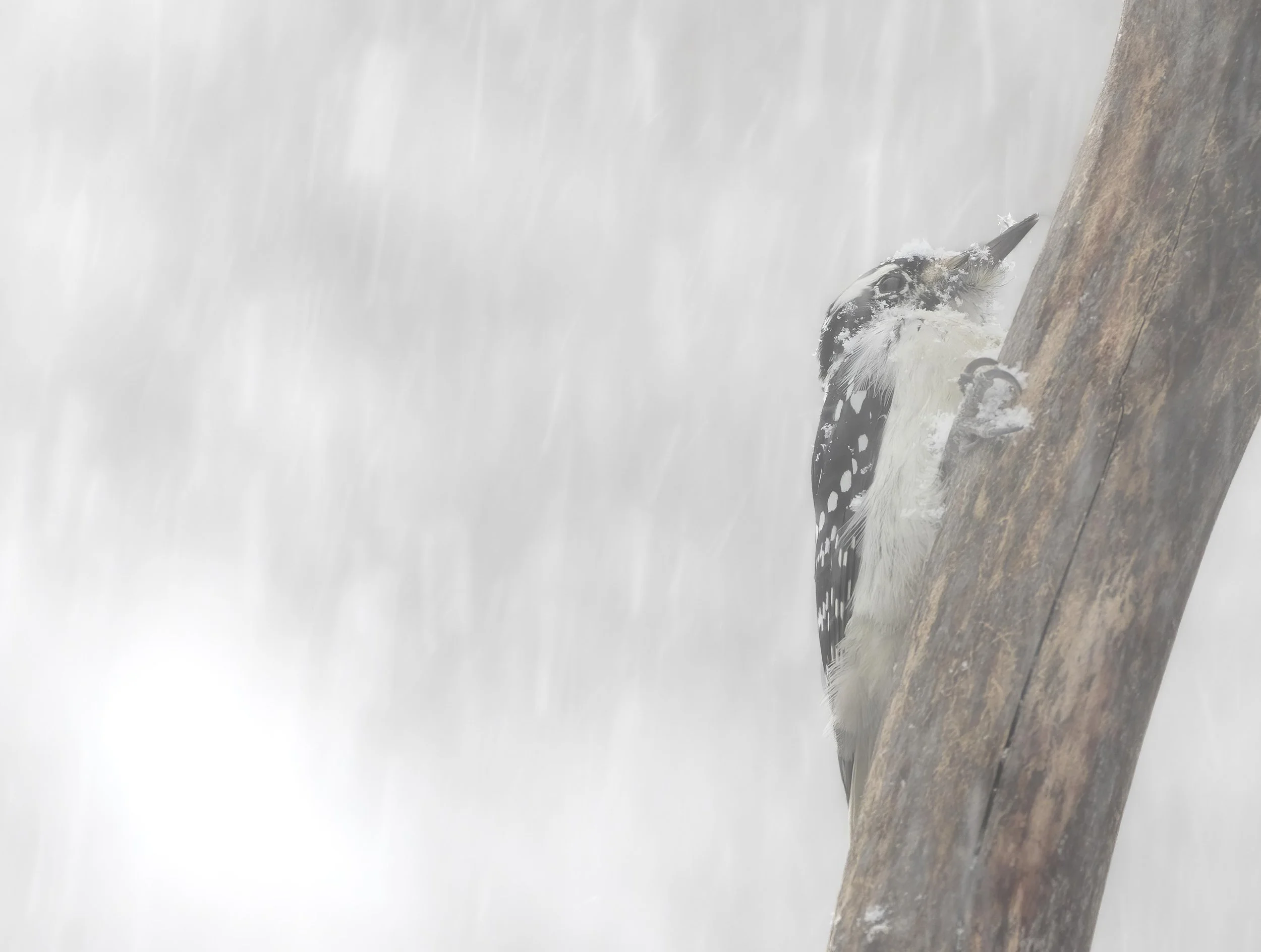
Downy Woodpecker - Snow Storm - Canon R3 EF 200-400 L IS - 1/40th Sec - f8 - ISO 1250 +1 EC - Not enough Grey Appearing!
Composition and Creative Choices
Composition remains essential, even in minimalist snowy landscapes. Use leading lines, negative space, and natural framing to guide the viewer’s eye toward your subject.
Experiment with aperture and shutter speed to add creativity. Fast shutter speeds can freeze falling snowflakes for a crisp, detailed look, while slower shutter speeds introduce motion and atmosphere, conveying wind and snowfall. Changing these settings can completely alter the mood of an image and help your work stand out.
Focus, Manual Control, and Sharpness
Snowfall can confuse autofocus systems, causing them to lock onto snowflakes rather than your subject. In these situations, shooting in manual focus or using manual override can be extremely effective. Using a good depth of field helps ensure critical parts of your subject remain sharp.
In some scenarios, focus stacking techniques can be used to achieve maximum sharpness across your subject, especially when depth of field is limited. These methods are particularly useful when conditions allow for controlled shooting.
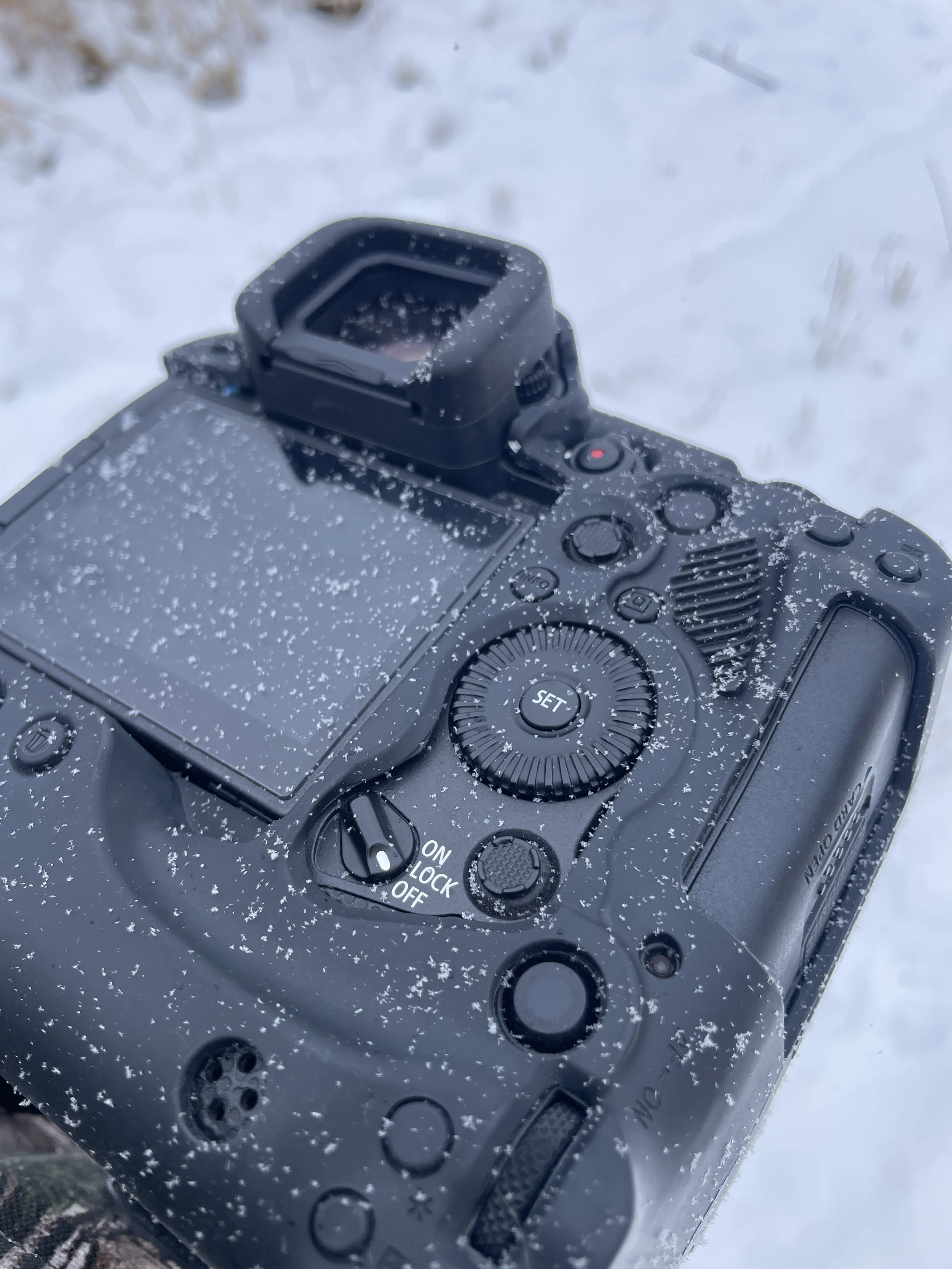
Canon R3 - Weather Proof and fully sealed but it’s always good to use added protection!
Protecting Your Gear in Cold and Wet Conditions
Snow, sleet, and freezing rain are unforgiving on equipment. Always use a protective cover to keep your camera and lenses dry. Even weather-sealed gear benefits from extra protection during prolonged exposure.
Cold temperatures significantly reduce battery performance because chemical reactions inside batteries slow down. Keep spare batteries warm and dry, ideally in a breast pocket close to your body or an insulated part of your bag. Rotate batteries regularly, often a “dead” battery will recover some charge once warmed.
Preventing Condensation and Fungal Damage
Moving equipment between warm and cold environments can cause condensation to form inside lenses and camera bodies. Trapped moisture can lead to fungal growth and corrosion, resulting in costly repairs.
To prevent this, place your gear in a sealed plastic bag before transitioning between temperatures and allow it to acclimatise gradually. Condensation will form on the bag rather than your equipment.
At home, I store my gear in a Ruggard temperature-controlled dry cabinet, which almost completely eliminates fungal and rust issues, an invaluable solution for photographers who work in damp or cold climates.
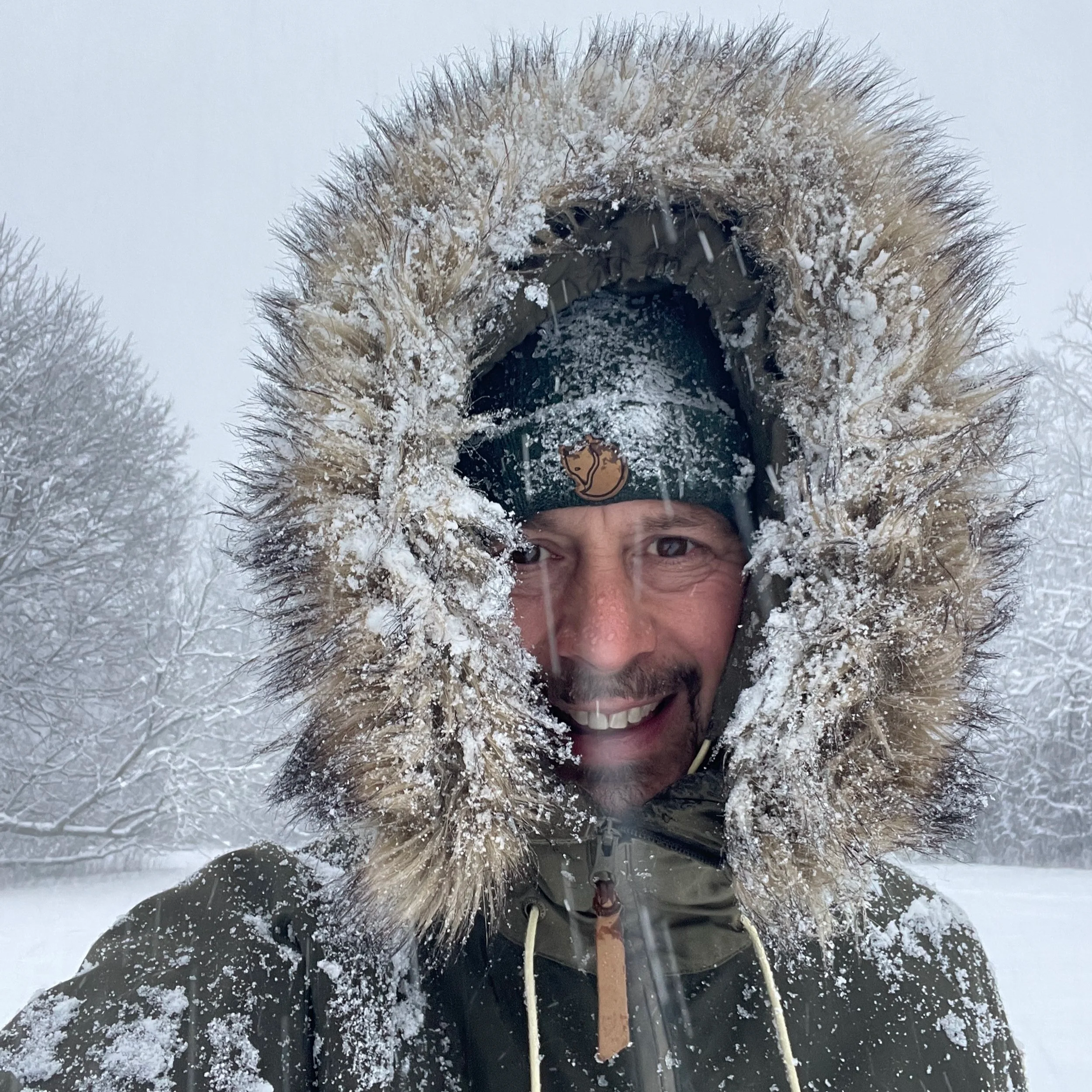
Dressing for Comfort and Survival
No photograph is worth risking your health. Always dress appropriately using the layer principle, regardless of how close you are to home. As an ex-military survival specialist, I always emphasise the four basic rules of survival: Protection, Location, Water, and Food.
Footwear is vitally important. Insulated boots paired with merino wool socks (or similar) will keep your feet warm and dry during long sessions in snow. Head protection is equally critical, as a significant amount of body heat escapes through the head.
Gloves are essential. Without proper gloves, you increase your risk of frost nip or frostbite. I use Vallerret gloves, which are designed specifically for photographers, offering warmth while maintaining full control of camera functions.
Hand warmers or heating pads placed in pockets can be a lifesaver, and heated gloves are an excellent option, just remember that battery drain will occur in cold conditions.
Final Thoughts
Snowy environments provide some of the most striking and atmospheric wildlife photography opportunities available. By understanding exposure, embracing hi-key techniques, protecting your equipment, and preparing yourself properly, you’ll be free to focus on capturing compelling stories of wildlife thriving in some of the harshest conditions on Earth.
If you have time to leave a comment below it’s always very much appreciated.
Thanks again for stopping by. Rich :-)
I’ve got a few videos to accompany this blog if you fancy watching.
Ruggard Dry Cabinet - Store your photographic equipment to prevent fungal growth.
Tips for Photographing Wildlife in the Snow - Some Tips & Tricks to help you shoot in the Snow & how to protect yourself.
Winter Wildlife Photography - Tips for Snow Shooting