
The Art of Stalking Wildlife – Becoming Part of Nature's World
More Than Just Taking Photographs!
Wildlife photography means many different things to different people. For some, it's about capturing a beautiful image. For others, it's about documenting a species or simply spending time outdoors. For me, it has always been about entering the subject's world and observing genuine moments in nature with as little disturbance as possible.
After more than 40 years as a wildlife photographer, my philosophy remains unchanged. My goal is not simply to photograph wildlife, but to witness and document natural behaviour without influencing it. Of course, this is not always possible. Wildlife is unpredictable and animals will often become aware of your presence no matter how careful you are. However, I always do my very best to avoid altering behaviour and disrupting the natural rhythm of an animal's day.
Some of the most rewarding moments I've experienced have resulted in no photograph at all. Watching an animal continue feeding, resting or interacting naturally, completely unaware of my presence, often brings me more satisfaction than any image I could take.
A Lifetime of Learning Fieldcraft
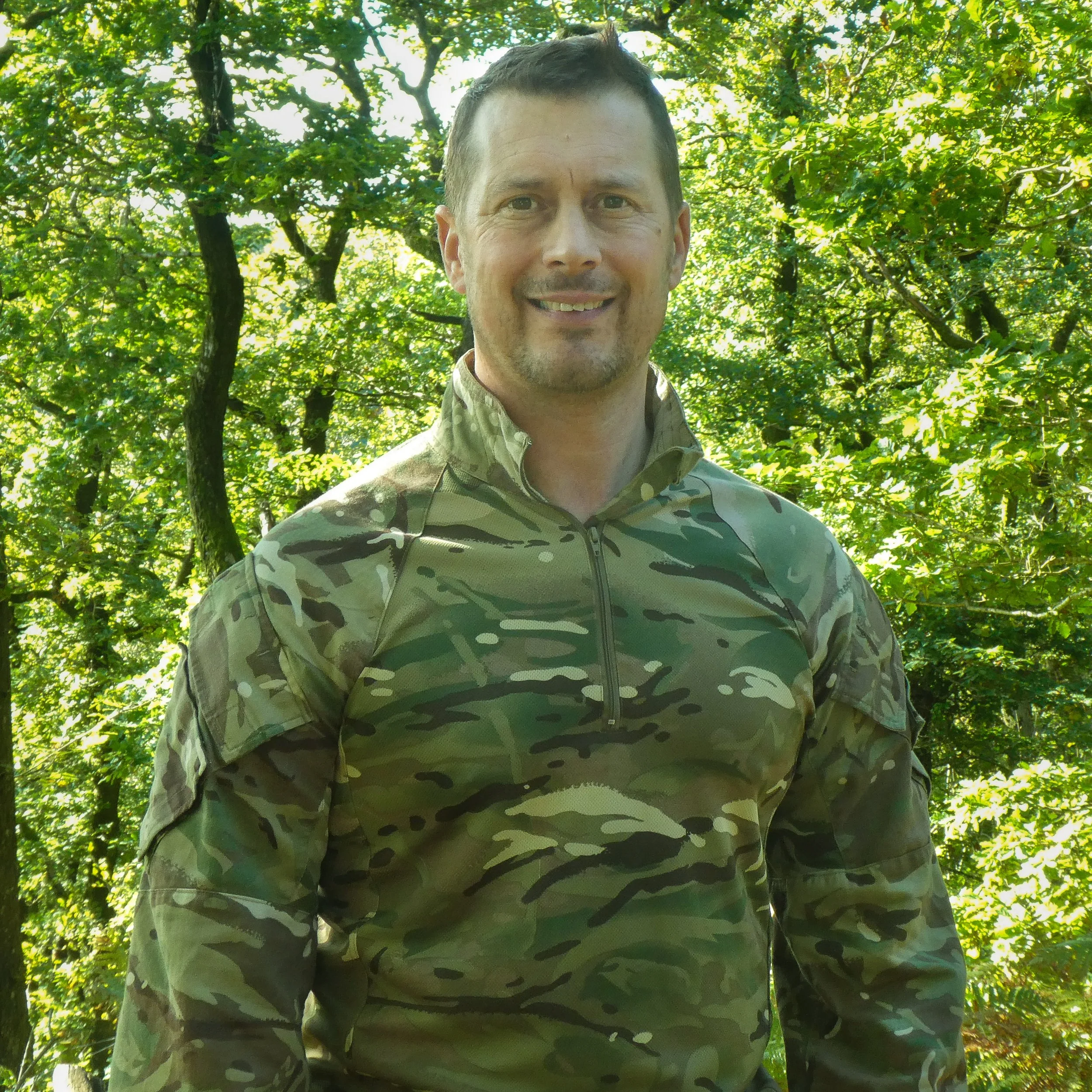
My approach to wildlife photography has been heavily influenced by my background. Alongside four decades of photography, I spent over 22 years in the UK military as a Survival Specialist and tracker. During that time, I learned the importance of observation, patience, fieldcraft and awareness. Those skills have become invaluable when working with wildlife.
Many people assume camouflage clothing is the secret to getting close to animals. While camouflage certainly helps and I would always recommend using it, it is only one piece of a much larger puzzle. Successful stalking relies on a combination of skills developed through years of experience. Reading tracks, understanding behaviour, recognising alarm calls, interpreting body language, using wind direction and moving with purpose all play an equally important role.
Stalking wildlife is not a skill learned overnight. It takes years of trial and error, success and failure. Every encounter teaches you something. Every mistake provides a lesson. Over time, you begin to understand how animals interact with their environment and how to move through that same environment without drawing attention to yourself.
Learning to Read Nature's Language
One of the most important skills is learning to read nature's signs. Birds are often the first indicators that something is happening. Alarm calls can reveal the presence of predators, other wildlife or even your own position if you have moved carelessly. Changes in behaviour among birds and mammals can tell you far more than many people realise.
Nature is constantly communicating with us, but only if we take the time to listen.
Despite all our technology and equipment, nature is almost always one step ahead. Animals possess senses far beyond our own. A deer's sense of smell is estimated to be hundreds of times more sensitive than that of a human, with tens of millions more scent receptors dedicated to detecting danger. Many birds possess exceptional eyesight, capable of detecting movement at remarkable distances, while predators and prey alike have evolved highly specialised senses that have ensured their survival for thousands of generations.
This is what makes stalking wildlife such a challenge.
A Roe Deer Encounter
A recent encounter with a Roe Deer perfectly illustrates this.
I was moving slowly through our woodland of conifers when I noticed the deer feeding ahead. Using a 200mm focal length, I observed from a respectful distance. Almost immediately, I could see the animal becoming uneasy. Its ears rotated independently, searching for the source of the faint sounds I had made while moving through the woodland. Its nose repeatedly tested the air and I could see it attempting to gather information from every available sense. At one point it displayed a flehmen response, trying to gather even more information from scents carried on the breeze.
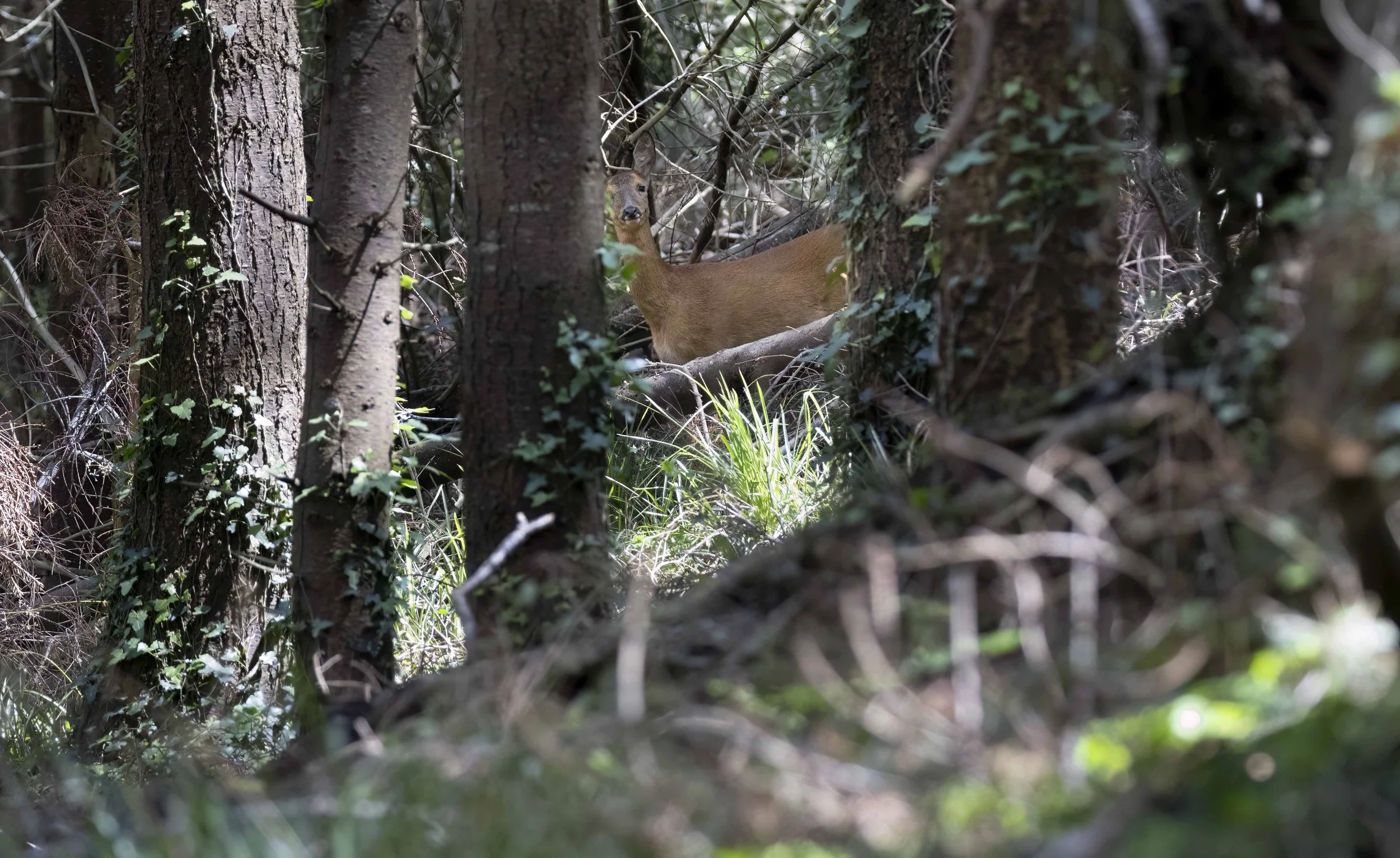
Roe Deer - Note: Alert posture and Ears upright.
The wind was in my favour, but instinct told the deer that something wasn't quite right.
At that moment, I had a choice. I could continue advancing and risk disturbing the animal in pursuit of a photograph, or I could back away and allow it to settle.
The temptation to get the shot is always there. Every wildlife photographer understands that feeling.
Instead, I chose patience.
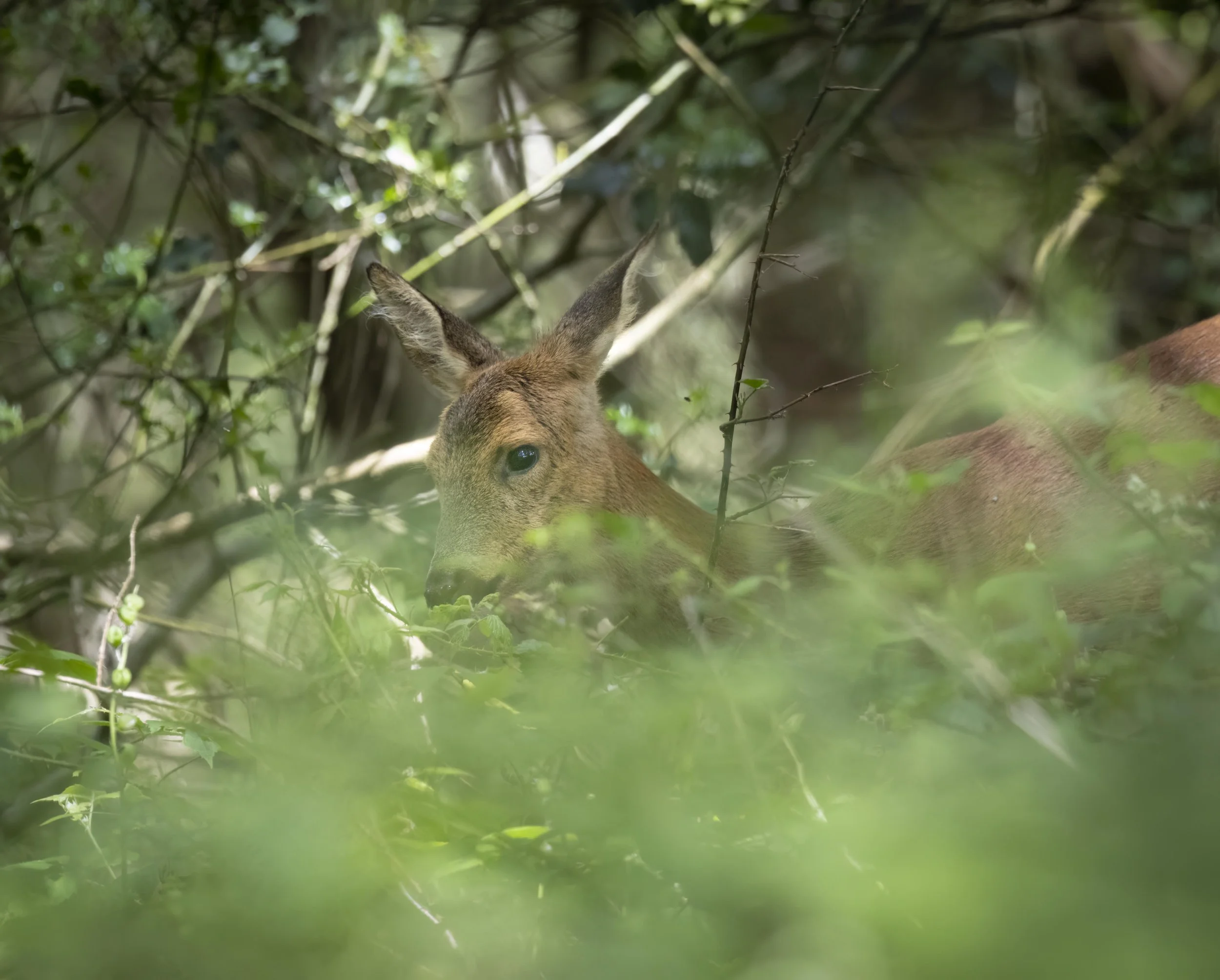
I retreated slightly and sat quietly amongst the trees. Slowly, the deer relaxed. It resumed feeding and eventually continued its natural movement through the woodland. To my surprise, it gradually closed the distance itself, making its way down the slope towards me.
Moments like that are worth far more than any photograph.
What is always on my mind during encounters like this is the simple question: have I changed the animal's behaviour for my own benefit?
If the answer is yes, then I have been too hasty.
I would rather leave without a photograph than force an animal to flee because of my presence. Watching that Roe Deer continue its day naturally, either accepting me or remaining unaware I was there, was far more important than filling a memory card.
Move With Purpose
Deer are among the wariest mammals I photograph. Having stalked Red Deer on Exmoor for over 25 years, I have had plenty of practice. Yet even after thousands of hours observing them, they continue to teach me new lessons.
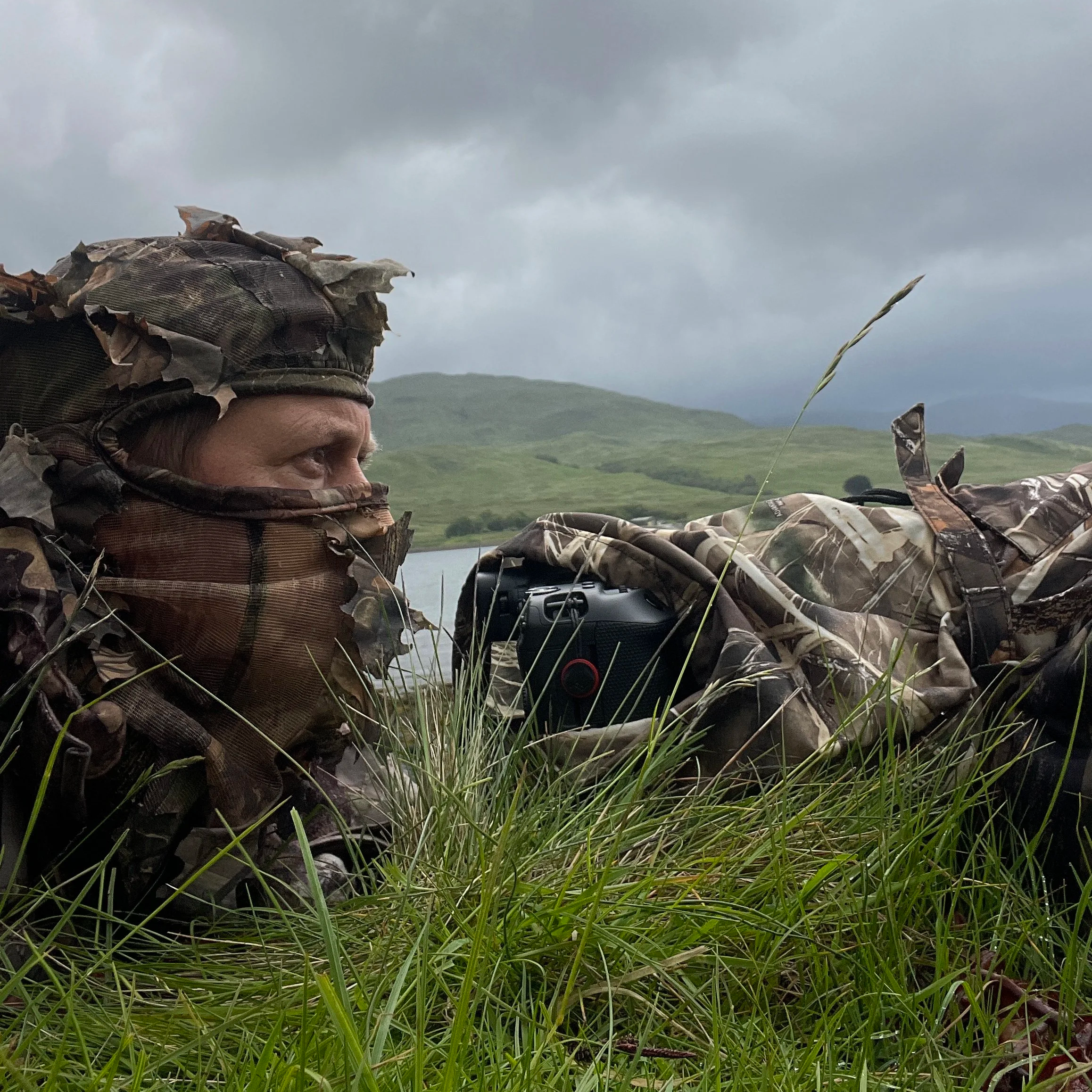
Moving through woodland quietly is never easy. Dry twigs, fallen branches and leaves underfoot can betray your presence instantly. On calm days with little wind to mask sound, progress can be painfully slow. Every step matters.
When stalking wildlife, I often remind myself to move as though my life depends on it.
Move lightly. Move with purpose.
Then stop.
Listen.
Observe.
Allow your senses to absorb everything around you.
Observation Never Switches Off
One thing people often notice when they join me on workshops and phototours is how I seem to spot wildlife or hear things long before they do. Whether it's the distant bark of a Roe Deer, the alarm call of a blackbird or a subtle movement in the undergrowth, I often become aware of it before others.
The reason is simple. Observation is not something I switch on when I pick up a camera.
It has become a way of life.
Whether I'm leading a workshop, walking with family through the countryside or even visiting a busy city, my observation skills are constantly being exercised. I notice movement, behaviour, sounds and patterns almost without thinking.
For me, these skills need to be maintained. If they are not used, they fade. Just like photography itself, observation requires practice.
Rediscovering Lost Human Skills
Many people view this level of immersion in nature as hard work. In today's world, where convenience is often prioritised, spending hours moving slowly through woodland and carefully reading signs can seem unnecessary.
Yet these are skills our ancestors once relied upon every day.
As hunter-gatherers, humans survived because they could read tracks, interpret signs, understand animal behaviour and move through landscapes effectively. Their lives depended upon awareness and observation. Over time, many of those instincts have diminished as modern life removed the need for them.
For me, those abilities still matter.
My military training reinforced that belief. In genuine survival situations, awareness and observation can mean the difference between success and failure, and potentially life and death. While wildlife photography is obviously a different environment, many of the same principles still apply.
Why I don’t use baited Wildlife Hides
This is one reason why I don’t use baited hides.
I completely understand their appeal and there are many photographers choosing to use them. They provide fantastic opportunities and allow many people to photograph species they may otherwise never encounter, or have a disability which doesn’t allow them to venture deep into the wilderness .

However, for me personally, they remove much of what I enjoy most about wildlife photography.
When everything is prepared and wildlife arrives at a predictable location, much of the challenge disappears. The process becomes less about understanding the animal and more about operating the camera. The real reward for me comes from finding the subject, reading the landscape, understanding behaviour and gradually earning a close encounter through patience and fieldcraft.
Every photographer has their own approach, and rightly so. There is no single correct way to enjoy wildlife photography.
But for me, fieldcraft is the foundation upon which everything else is built.
Most importantly, it helps keep me ethical.
We Are Part of Nature
I believe we sometimes forget that we are not separate from nature. We often view wildlife as something external, something we visit occasionally before returning to our normal lives. The reality is that we are part of the same natural world. The deer, birds, insects and woodlands that surround us are not separate from us. We are simply another species sharing the same environment. The more time I spend immersed in nature, the more obvious that becomes.
Conclusion: The Photograph Is Only the Reward
After more than 40 years of wildlife photography, I have come to realise that the photograph itself is often the least important part of the experience.
The image is simply a record of a moment.
What matters most is the journey that led to it, the patience, observation, fieldcraft and respect for the animal. It is about learning to move quietly through nature, understanding behaviour, reading signs and allowing wildlife to remain wild.
Some of my greatest successes have not been measured by the photographs I captured, but by the moments where I was accepted into an animal's world without causing disturbance.
For me, that is the true art of stalking wildlife.
It is not about getting closer than anyone else. It is not about collecting photographs. It is about understanding, respecting and reconnecting with the natural world around us.
The photograph is merely the reward.
The real privilege is being there at all.
Thanks for checking out my latest Blog, if you would like to leave a comment below it’s very much appreciated.
Rich :-)