
Riding The Canadian: Testing the Canon RF 100–300mm f/2.8L IS - on a Transcontinental Journey
Travelling from Ottawa to Vancouver and then by seaplane to Vancouver Island aboard VIA Rail’s legendary transcontinental route—The Canadian—is an experience that blends nostalgia, wilderness, and sheer geographic scale. Over two weeks, I crossed the entire breadth of the country with a rare opportunity in hand: a loaned Canon RF 100–300mm f/2.8L IS, one of Canon’s fastest and most versatile telephoto zooms. What better proving ground than a journey through six provinces, endless forests, prairies, mountains, and some of Canada’s most dramatic wildlife encounters?
Crossing a Continent by Rail
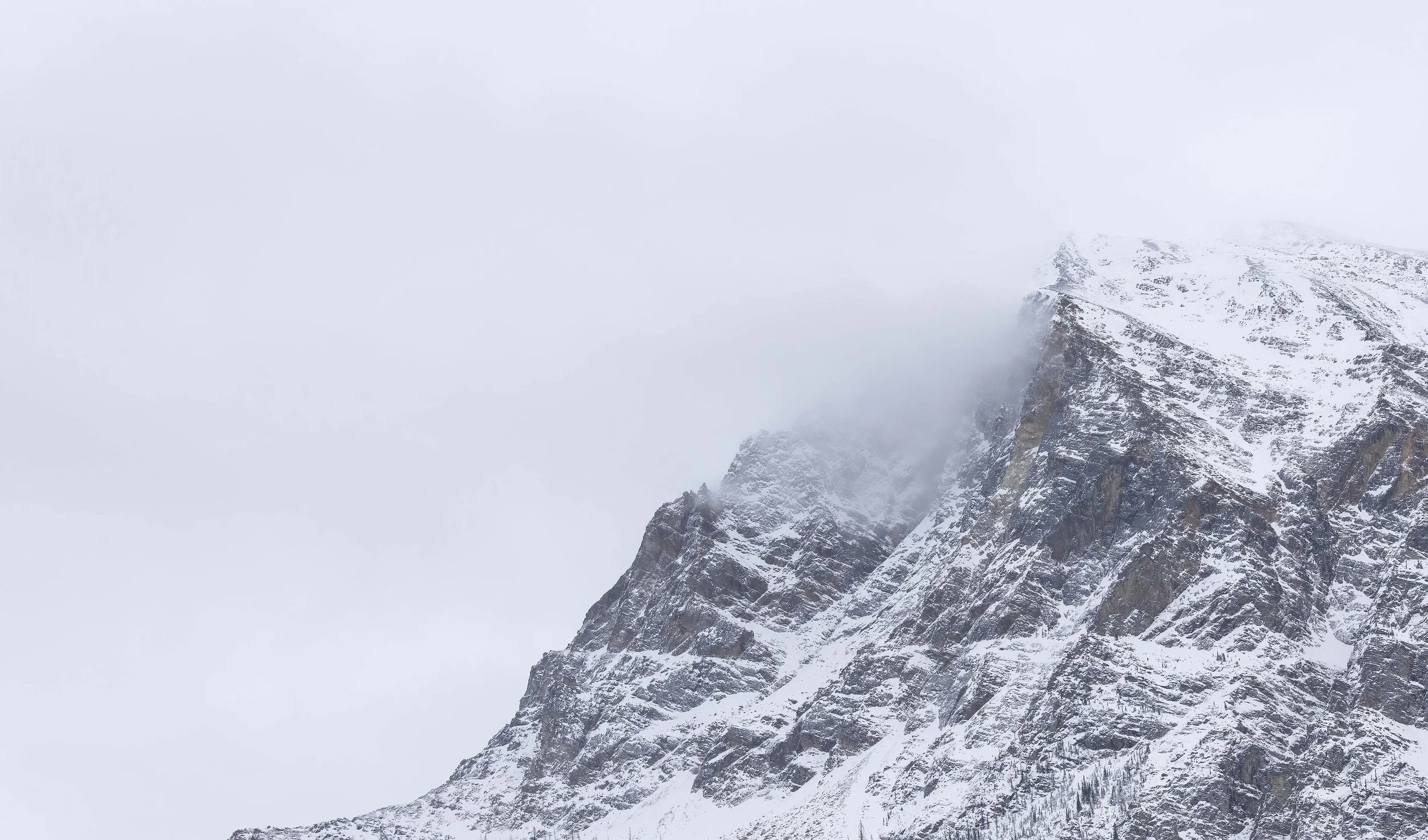
Jasper, Alberta - Canon R3 - RF 100-300 L IS - 100mm at 1/320th Sec f6.3 ISO 400
The route winds from Ontario through Manitoba, Saskatchewan, Alberta, and finally to British Columbia before I continued onward to Vancouver Island. Watching Canada change through the train windows—lakes giving way to prairie, prairie exploding into the Rockies—made the perfect backdrop to test the lens across environments. But it wasn’t until arriving in Jasper for four full days that the lens truly had the chance to shine.
Wildlife Encounters in Jasper: Elk, Moose, Dippers and More
Jasper in autumn/early winter is raw and electric with energy. Bull elk were deep into the rut, clashing antlers beneath fresh snow-dusted peaks. With the RF 100–300 f/2.8 mounted on my Canon R3, I was able to capture intimate moments of dominance, tension, and posture—sometimes even wide-open at f/2.8 against the towering white mountains.
What impressed me immediately was how sharp the lens was corner-to-corner. Whether at f/2.8, stopped down to f/8, or even f/10, the detail held beautifully. Hair texture, frost on backs, steam from breaths—the micro-contrast was exceptional.
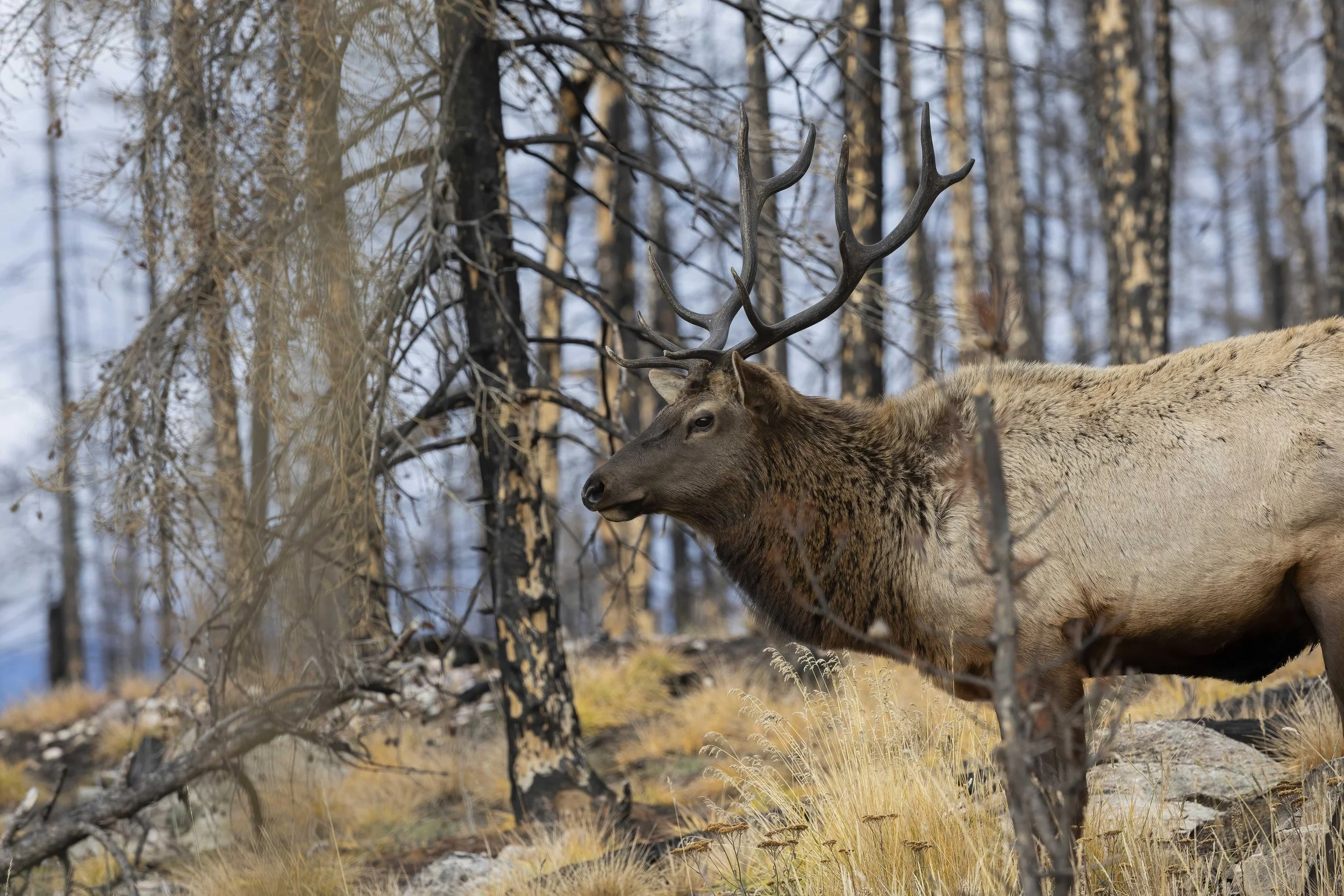
Bull Elk - Canon R3 - RF 100-300 f2.8 L IS - 1/1250th Sec - f6.3 - ISO 1000
The lens also excelled photographing moose at distance, and later, small songbirds buried in cluttered branches. Even with chaotic backgrounds, autofocus snapped confidently onto the eye or head, refusing to get distracted.
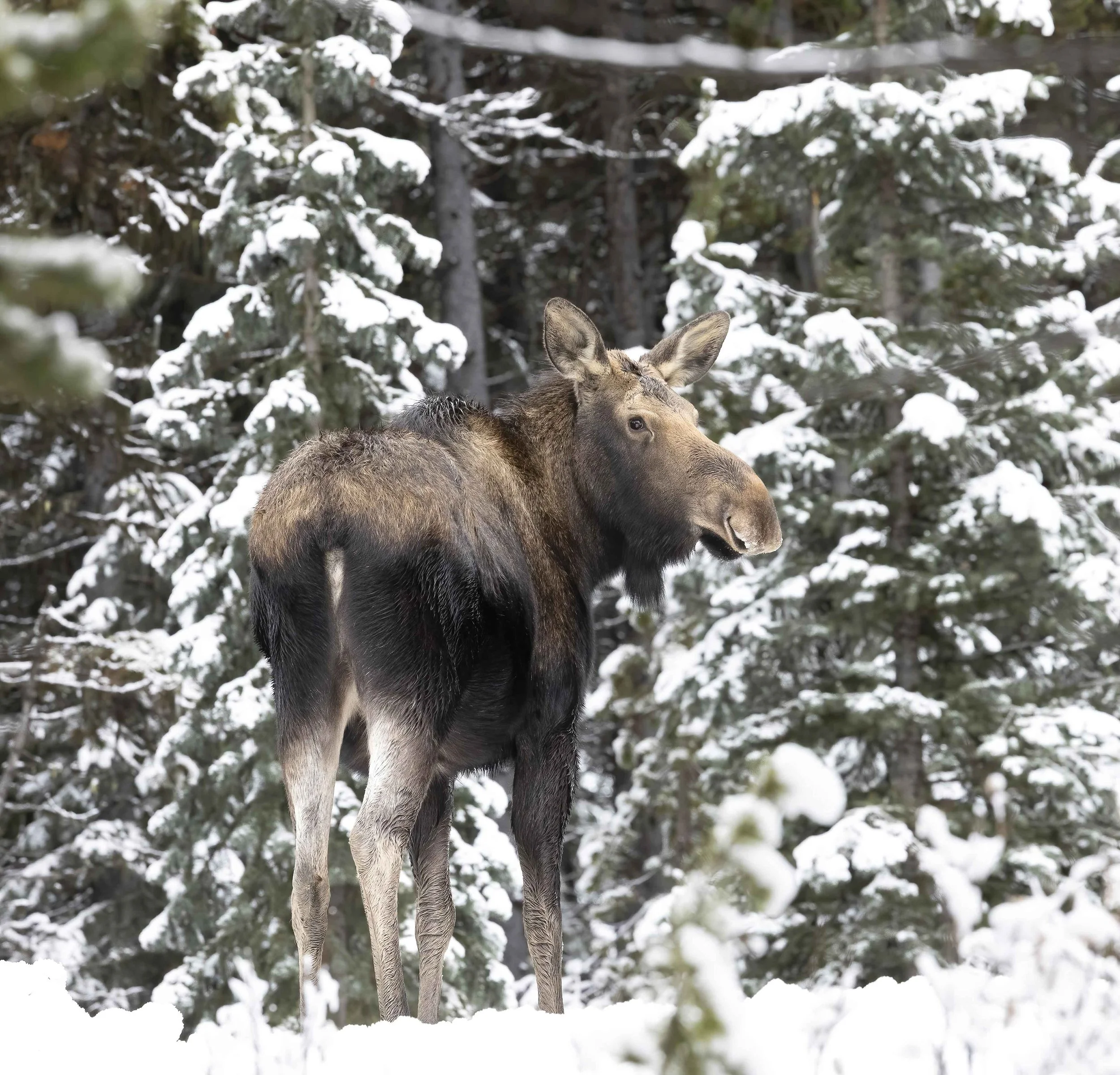
Moose Cow - Alberta Canada - Canon R3 - RF 100-300 f2.8 L IS - 1/400th Sec - f8 - ISO 5000
Speed, Weight, and Handling
Despite being a constant f/2.8 telephoto zoom, the RF 100–300 is surprisingly lightweight for what it is. During long hikes and constant repositioning around wildlife, I found it entirely manageable. The autofocus was incredibly fast, even with erratic birds, and the Image Stabilisation was a legitimate highlight.
Shooting handheld video—especially in tight or uneven terrain—was shockingly smooth. Not having room for a large video head or tripod usually means compromise, but IS made handheld clips of elk and river scenes look impressively stable.
Birds in Flight and Slow Motion
One of the most memorable moments was filming a bald eagle sweeping over a frozen lake before disappearing into dense forest. Tracking a bird at that distance is always a challenge, yet the RF 100–300 locked on confidently. Slow-motion footage held onto crisp edges and contrast, something my older EF glass sometimes struggles with.
Later, photographing American dippers along a river required getting very, very wet. I immersed myself knee-deep, using the R3’s articulated screen for low-angle compositions. The lens delivered beautiful sharpness—every droplet, every feather—despite the fast, jittery movements of the bird.

American Dipper - Canon R3 - RF 100-300 f2.8 L IS - 1/30th Sec - f8 - ISO 320
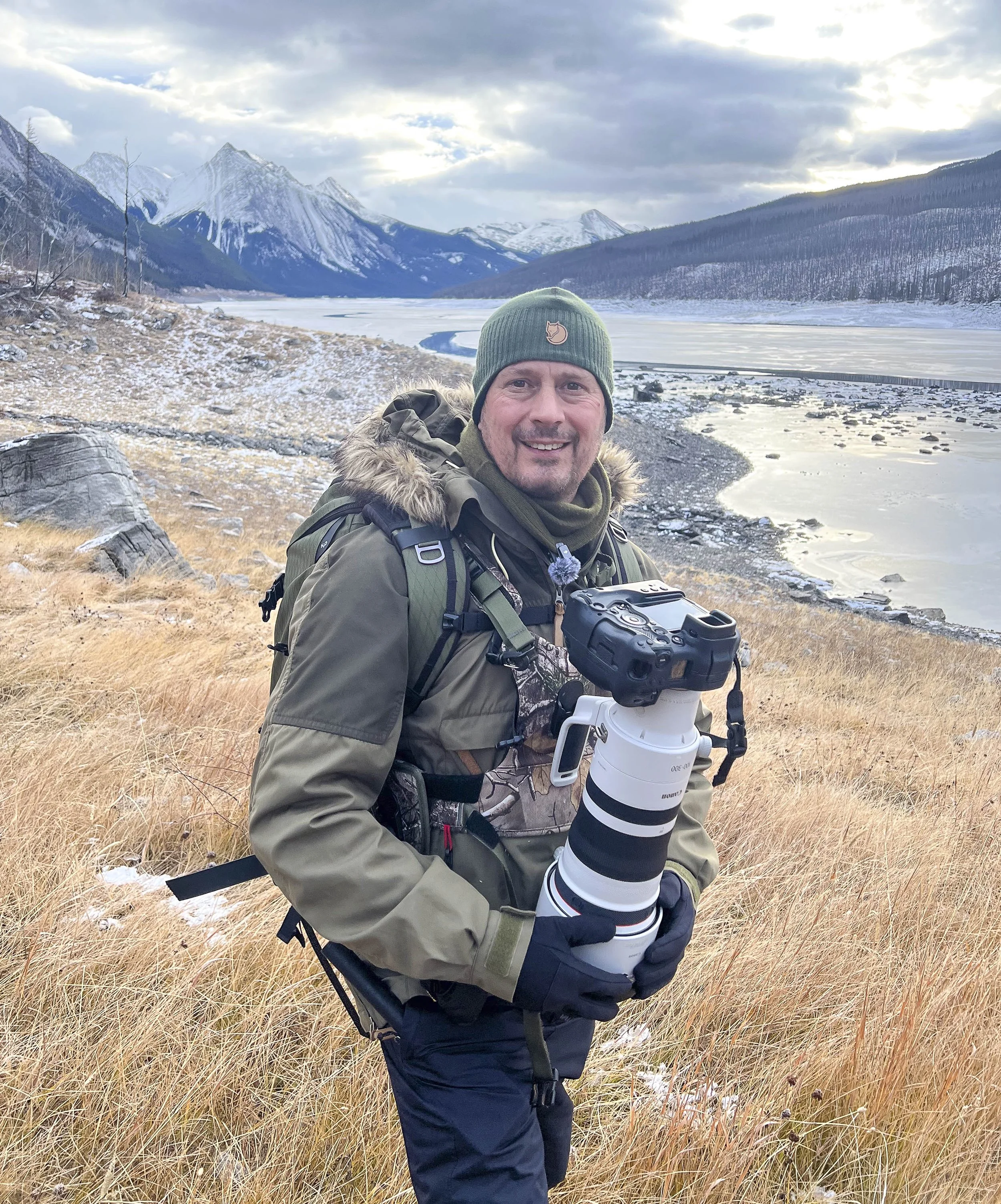
Medicine Lake - Alberta Canada - Canon R3 & RF 100-300 L IS
RF vs EF: Is It Worth the Upgrade?
I used the lens natively—no teleconverters this time, though I hope to test the RF 1.4x and 2x in a future review. I’ve heard superb things about the 1.4x, with virtually no noticeable optical drop-off, while the 2x reportedly begins to soften, especially wide-open.
Compared to my trusted Canon EF 300mm f/2.8L IS Mk I, I didn’t see a dramatic real-world performance leap. The RF was lighter, faster in many cases, and optically excellent—but not so revolutionary that I’d rush to replace my current system. Still, if budget weren’t a consideration, I’d welcome the RF 100–300 in my kit without hesitation.
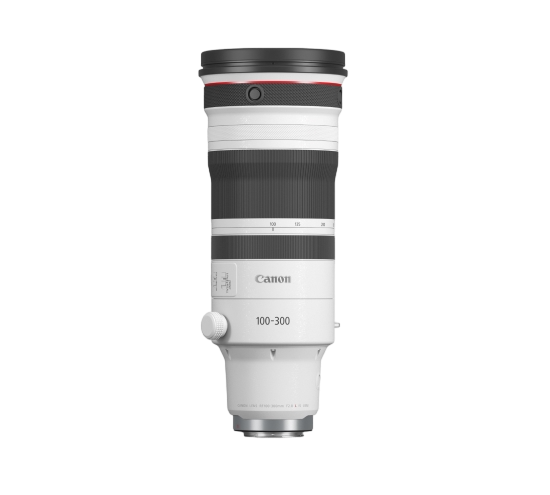
Lens Specifications (Expanded Overview)
Focal Length: 100–300mm
Maximum Aperture: f/2.8 constant
Image Stabilisation: Approximately 5–6 stops depending on camera body
Autofocus: Dual Nano USM for fast, quiet, reliable AF
Optics: L-series build with fluorite and UD elements
Weight: - 2.6 kg/5.73 Ibs
Weather Sealing: Exceptional weatherproofing designed to withstand rain, snow, dust, and harsh climates—provided it isn’t fully immersed and is paired with a weather-sealed body. This makes it extremely dependable for outdoor and adventure photography.
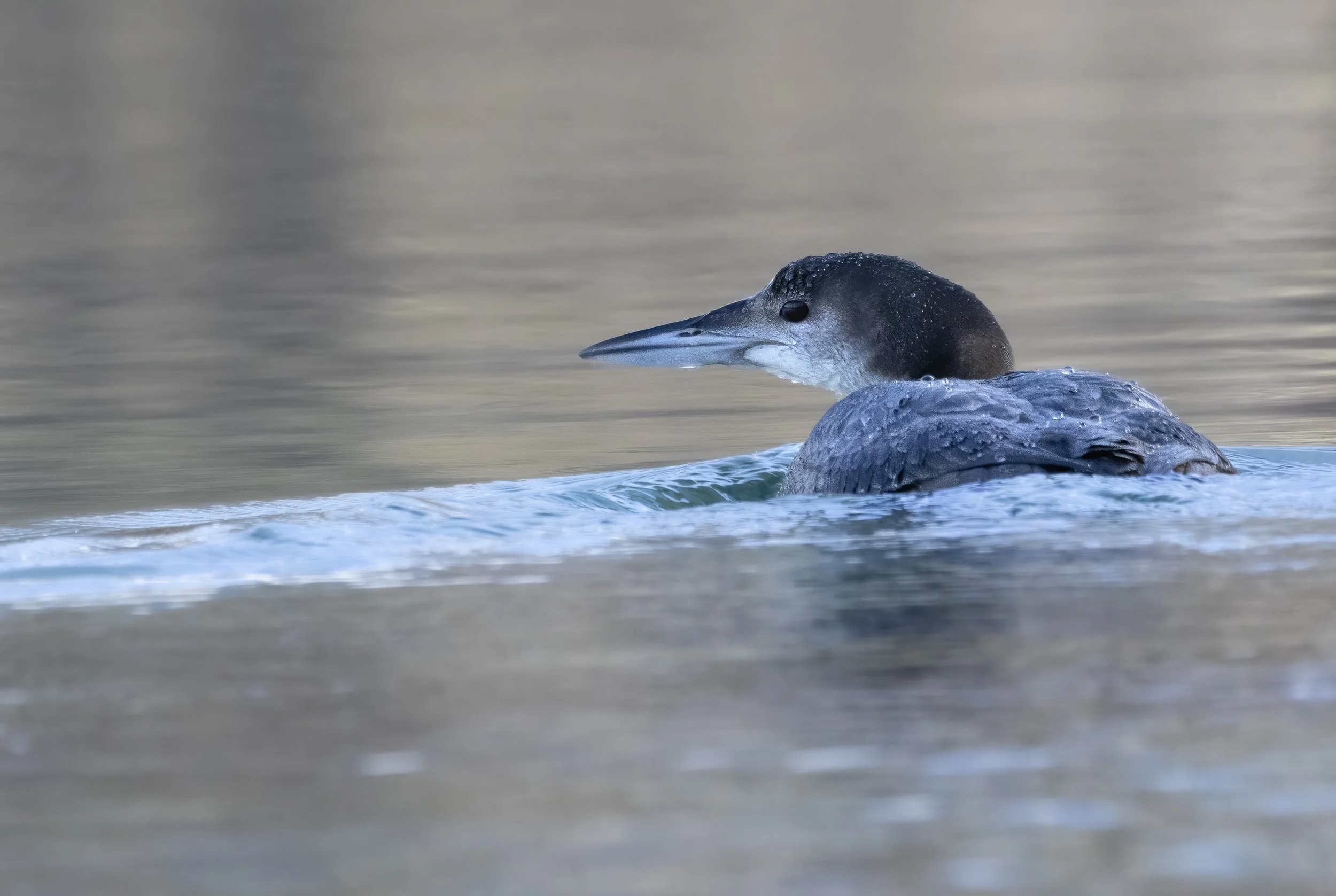
Common Loon (Juv) - Canon R7 - RF 100-300 L IS - 1/1250th Sec - f8 - ISO 5000
Final Thoughts
After two weeks of testing the Canon RF 100–300mm f/2.8L IS across an entire continent—from prairie sunsets to frozen lakes, dense forests, and the rugged valleys of Jasper—this lens left a lasting impression. It is, without question, one of the most capable and versatile professional telephoto zooms available today. The combination of reach, constant f/2.8 aperture, astonishing sharpness, and robust weather sealing gives you a tool that feels ready for anything nature dares to throw at you.
One area I didn’t have the opportunity to test extensively was true low-light performance. Most of my shooting took place during daylight hours or in overcast mountain conditions. But based on how clean and crisp the files were at f/2.8—even in shadowed forests—I have every confidence the lens would deliver exceptional results in dimmer scenarios. Pairing it with the Canon R3, which is already a low-light powerhouse, would undoubtedly unlock superb performance for dusk wildlife, nighttime documentary work, or indoor action. While not tested on this trip, I feel very comfortable saying the optical and sensor combination would thrive when the light fades.
I can whole-heartedly recommend this lens to anyone who needs a 100–300mm range and values the ability to extend that reach further with teleconverters. With the RF 1.4x and 2x, you can push the system to 200–420mm or even 200–600mm. For travelling photographers—especially wildlife or sports shooters—this flexibility can dramatically reduce the number of lenses you need to pack, saving weight and precious baggage space. On long trips like my cross-Canada rail journey, that practicality alone is a major advantage.
Of course, versatility and optical excellence come at a price. At £11,500 (UK) or roughly $14,000 CAD, this is not a casual purchase. But it is an investment in a lens that will serve you exceptionally well in nearly every situation—from fast wildlife to handheld documentary work to low-light telephoto landscapes. Only in very niche scenarios, such as extreme long-range shooting or ultra-compact travel setups, might you find yourself reaching for something else.
My sincere thanks go to Canon CPS Canada for generously loaning me this incredible piece of engineering. The RF 100–300mm f/2.8L IS is a beast of a lens—intimidating in specs, inspiring in performance, and utterly dependable in the field. It never once let me down, even in brutal alpine weather, wet riverbanks, freezing mornings, and frenetic wildlife action.
If money were no object, it would be in my bag without hesitation. For now, I leave the experience with deep respect for what Canon has built—and with images and footage from the trip that I’ll value for years to come.
If you’d like to see the lens in action in the field, please check out my recent YouTube review here:
👉 Canon RF 100-300 L IS Review
If you’d be so kind, leaving a comment is always hugely appreciated—especially if you already own this lens, are thinking of buying it, or have alternative setups you prefer. I’d love to hear your experiences, thoughts, and comparisons.
This trip gave me images and footage—from elk to moose, from dippers to eagles—that I’ll treasure for years, and the RF 100–300mm f/2.8L IS played a major role in that. It’s a lens I won’t forget anytime soon.
Cheers Rich :-)